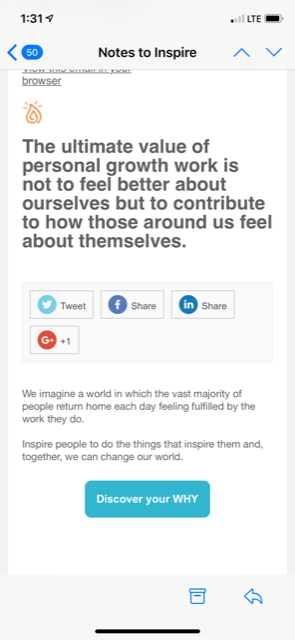
Brendon Burchard is a phenomenal writer and has inspired me multiple times.
This is spot on!
If we could take the time to repeat this as a mantra throughout our days, imagine how much better our days would go and how much larger of an impact we could have for the benefit of others!
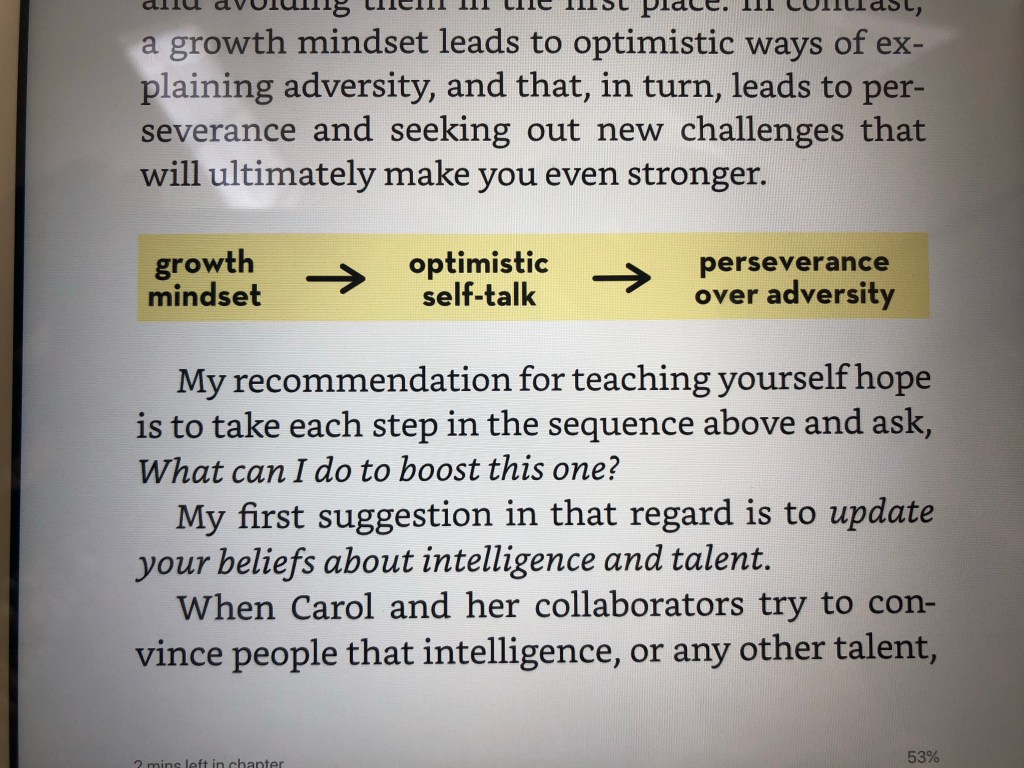
The picture above was taken from the book: Grit by Angela Duckworth.
It is a really good book.
In one chapter she discusses the difference between a fixed mindset and a growth mindset. She discusses the that key to cultivating a growth mindset (which has been connected to higher learning, more successful careers, larger more positive impacts, etc) is realizing that there is hope in your situation. When you can attach hope to any time of adversity, you realize you can decide to improve your current life. If you believe that you are hopeless than growth cannot occur.
The great news is that there is always hope.
So today, when faced with adversity, grab on to a hopeful future, realize you have options for a better tomorrow and GROW 🙂
So…it’s (its?) July, 2020 and the world is definitely on the wackadoodle side of normal. I guess a pandemic can do that. The thing that is most concerning to me, isn’t the virus. It is the fear, and how when left unchecked, it becomes a guillotine, sharp and divisive. Left vs right. Black vs white. Mask vs no mask. Vaxxers vs anti-vaxxers. The world has gone bi-polar and the middle ground (which is where I prefer to live on many things) is becoming a deeper and deeper canyon. Fear is a powerful and useful emotion. It is a great tool to spur action, to incite change. Fear should urge us to consider our options and steer our trajectory toward a brighter future. The key is it should help us use our other emotions and logic to make a decision. Fear should never drive the decision alone. Many times fear is irrational, and making decisions based on fear usually results in less-than-ideal situations. Fear is meant to propel us in short, fight vs flight moments. “Should I run from the grizzly bear, or fashion a bow and arrow out of that pine tree sapling and go toe-to-claw with the big fella?” Fear is definitively useful in those types of situations. But when fear gets to drive us on a day-to-day basis, the road we take will not be a straight, calm, collected or enjoyable one. When fear is behind the wheel, we are all over the damn road, erratic, swerving and taking a heck of a lot longer to get from point A to point B, because we aren’t really concerned with getting to point B at all, we just want to get as far away from point A as humanly possible in the shortest amount of time allowed. We aren’t concerned with a brighter future, we just want to run as far away from the here and now as we can.
Fear is regulated by a part of our brain called the amygdala, a primitive portion that when activated, shuts down our parasympathetic (resting) nervous system. Our heart rate increases, blood pressure elevates, energy is pushed away from our reproductive system and digestive system. The amygdala also puts the brakes on our prefrontal cortex a bit. As Marwa Azab, Ph.D. states in PsychologyToday.com (https://www.psychologytoday.com/us/blog/neuroscience-in-everyday-life/202003/10-things-the-brain-does-in-response-pandemic) “In situations that may compromise your survival, the brain would rather be overcautious and wrong. Rumors, fake news, and anomalous stories gain credibility.” Our emotional systems override our logic-based ones and we begin actively searching for threats, rather than working toward a more calm and collected state.
In scrolling through the “news feed” of the day, I can’t help but stop at some comments that I know incite even more divisiveness. And when I read the comments, I am saddened by the loss of connection that is propagating. No matter what side people fall on any of the topics, I can’t help but feel disheartened by the anger and estranging comments. There is so much “if you don’t feel this way you are actively trying to hurt others.” Or “If you don’t feel this way, you are a sheep, blindly following those in charge.” As I said before, I wholeheartedly believe neither of these positions ring true one bit. For the past few years I actually have been telling my wife that I was concerned how separated our world was becoming. It seems there are two sides to so many things, and too often only two sides (I know that’s a lot of twos and toos). Recent events are increasing the gap and that worries me.
Human beings thrive on connection. We don’t always need to agree on everything, in fact having some discourse and disagreements can help us learn, grow and understand. But when we are sitting in a place of fear, anxiety or worry, the disagreements can escalate to firm, immovable stances, and “immovable” definitely implies, “not-growing.” It has been said numerous times before, but it bears repeating: we are only going to get through this crazy time together. I don’t mean that in a cliche sense. There have been numerous scientific studies that show the power of connection. In one such study, strong social connection was correlated with a 50% increase in longevity (https://journals.plos.org/plosmedicine/article?id=10.1371/journal.pmed.1000316) and other studies have shown that social connection boosts immunity, lowers stress and increases empathy (which is something we all could use right now).
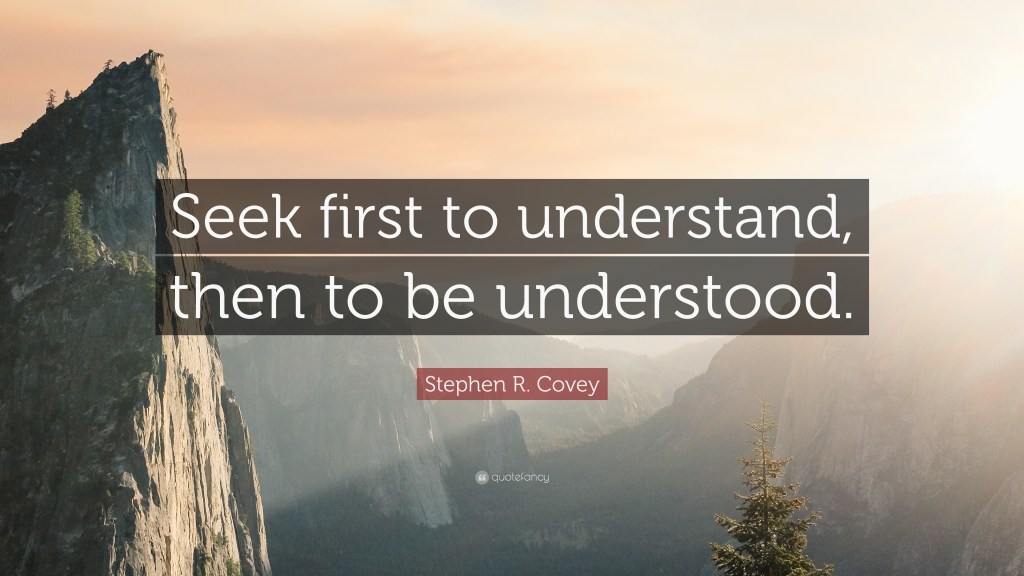
So, during this time, it is O.K. to put your stake in the ground so that others know where you stand. Just also realize that others have a different stake in a different ground and the best thing we can do as Stephen Covey has said is to “Seek first to understand.”
Jon Gordon has discussed this topic quite a few times on stage and in his books.
How many times do you think (especially on Monday’s) about what you “have to” do today?
“I have to go to work.”
“I have to take out the trash.”
“I have to pay that bill.”
“I have to unsubscribe from the free paper towels Monday email service. I still have no idea how they got my email…”
If you took the time and wrote out all the times you think about what you “have to” do, the list would be staggering.
If we could reframe those thoughts into “get to”, just replace one word, our world seems brighter.
You see, there are thousands of people who would love to GET TO do what you HAVE TI DO.
You have to go to work? Tons of people are out of jobs right now.
You have to take out the trash? A lot of people are homeless and don’t have a trash can to take out.
You have to unsubscribe from stupid junk emails? The world is full of people who don’t even own a computer.
And from another angle, everything we think we have to do, actually helps us somehow in our own lives.
So today, each time you think of something you have to do, spend twice the time thinking of how blessed you are to get to do it, and how whatever it is will actually help you in the long run.
Sometimes we forget that there would be no harvest without tending to the seeds, the efforts, the process, the journey.
The numbers are important. They are a way to see where we are at that moment in time. But they don’t tell the whole story.
Unless, we are hoping the story ends there (boring and finite).
No we forget that our efforts, our imaginations, our work ethic, our vision for the future and the connections we have and create with others will determine the bounty of future harvests.
It is impossible to precisely tell what the yield we be from our efforts.
But the key is to keep tending to the seeds, and to enjoy the journey.
Count the fruit, sure, but then get busy tending to the process :-).
I know many times, we human beings can be complacent.
Sometimes it’s sheer laziness.
Sometimes, it’s because we believe that since we are only 1/7,800,000,000th of the world’s population, what we do is too small to matter.
Maybe we feel that our actions/thoughts are just drops in a gigantic bucket.
Here’s the thing though: that bucket is so full because of the other 7.8 billion thoughts/actions put their drops in there!
One small action may seem infinitesimal, but without a whole heckuva lot of them, nothing gets accomplished and the “bucket” remains empty.
Also, your actions are more-than-likely going to cause others to act as well, and that butterfly effect can create huge consequences.
So, if you are holding back on writing your book, your blog, starting your business, saying what you feel, donating what you can, etc, because you feel your impact will be too small… rethink and realize, the world NEEDS your positive input.
WE (MYSELF INCLUDED) NEED what you can give!
Your “drop” matters SO much more than you know, and you are vastly more powerful that you can imagine!
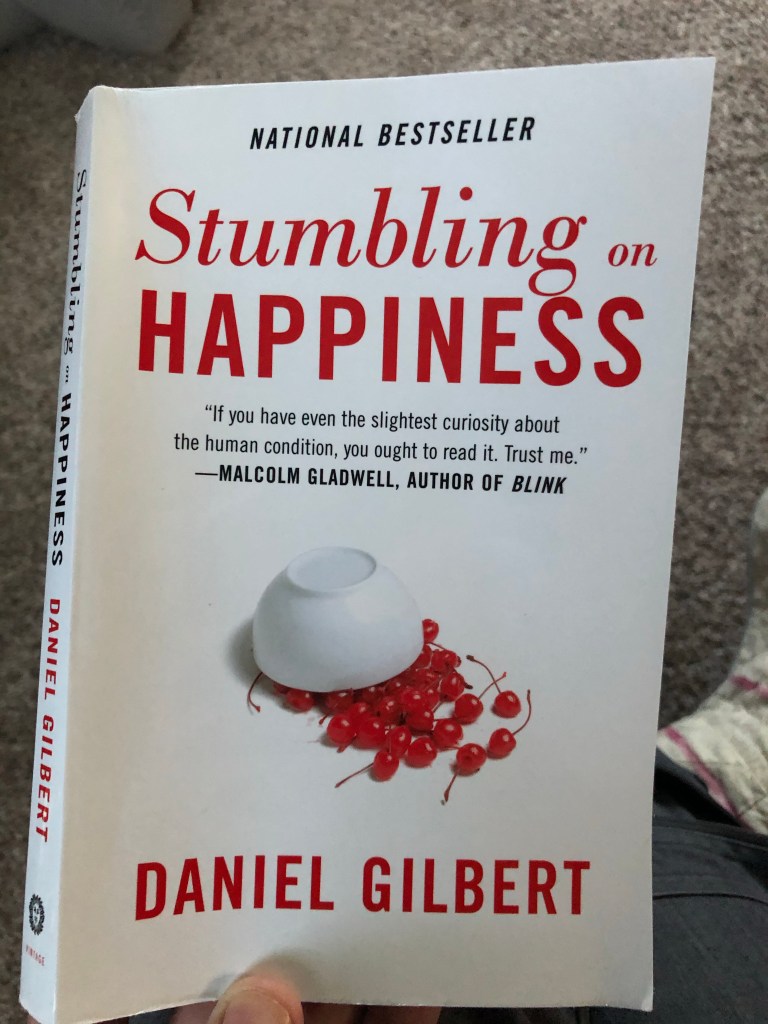
This morning, I watched a great interview with Nicholas Epley (author of “Mindwise” and Professor of Behavioral Science at the University of Chicago).
The interview was about the role of human connection on happiness, and the lengths people go to in order to avoid social interaction sometimes even though research shows that such connections make both parties much happier.
He discussed an interesting study.
People’s happiness levels were measured after increasing their income 4x (400%!) and measured people’s happiness levels when they felt “lonely yesterday.”
The feeling of loneliness had a 7x impact (negatively) in happiness levels compared to an income increase of 400%!
And yet in many instances, we choose to be lonely. On the bus, the train at D.I.A., on planes, in the checkout line at the supermarket, etc, we choose to keep to ourselves rather than connect with those around us. Some studies show this is because we feel we don’t want to “bother them,” but the research shows in almost all instances, engaging in light conversation/connection benefits the happiness of both parties.
We are more “connected” than ever before by virtue of social media, but we are also more lonely than ever before. Especially during these crazy times, it is even more imperative to reach out to others.
We are all lonely at times.
Work to change that today.
You will make others, AND YOURSELF, much happier in the process.
“About 50 years ago a Pygmy named Kenge took his first trip out of the dense, tropical forests of Africa and into the open plains in the company of an anthropologist. Buffalo appeared in the distance-small black specks against a bleached sky- and the Pygmy surveyed them curiously. Finally, he turned to the anthropologist and asked what kind of insects they were. “When I told Kenge that these insects were indeed large buffalo, he roared with laughter and told me not to tell such stupid lies.”
The Pygmy had no concept of a distant horizon, he lived his life in a dense tropical forest. His perception drove his reality.
Sometimes we need to borrow others’ vision in order to see what is possible. Sometimes we don’t have a concept of a distant horizon 🙂






 Dissemination of Inspiration