Life’s paper cuts/little triggers

In my book, one chapter is dedicated to the fact that life’s small inconveniences (spilled coffee, stepping in a mud puddle, etc) can exponentially create an entire “bad day.”

We tend to overreact to small problems when compared to large ones.

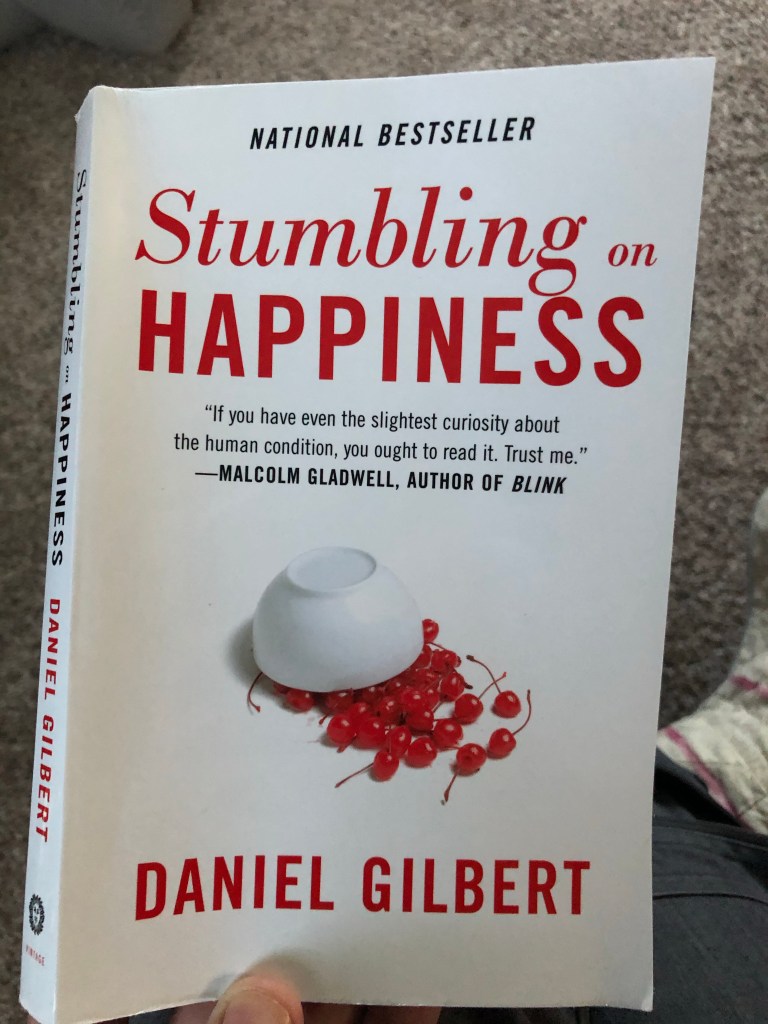
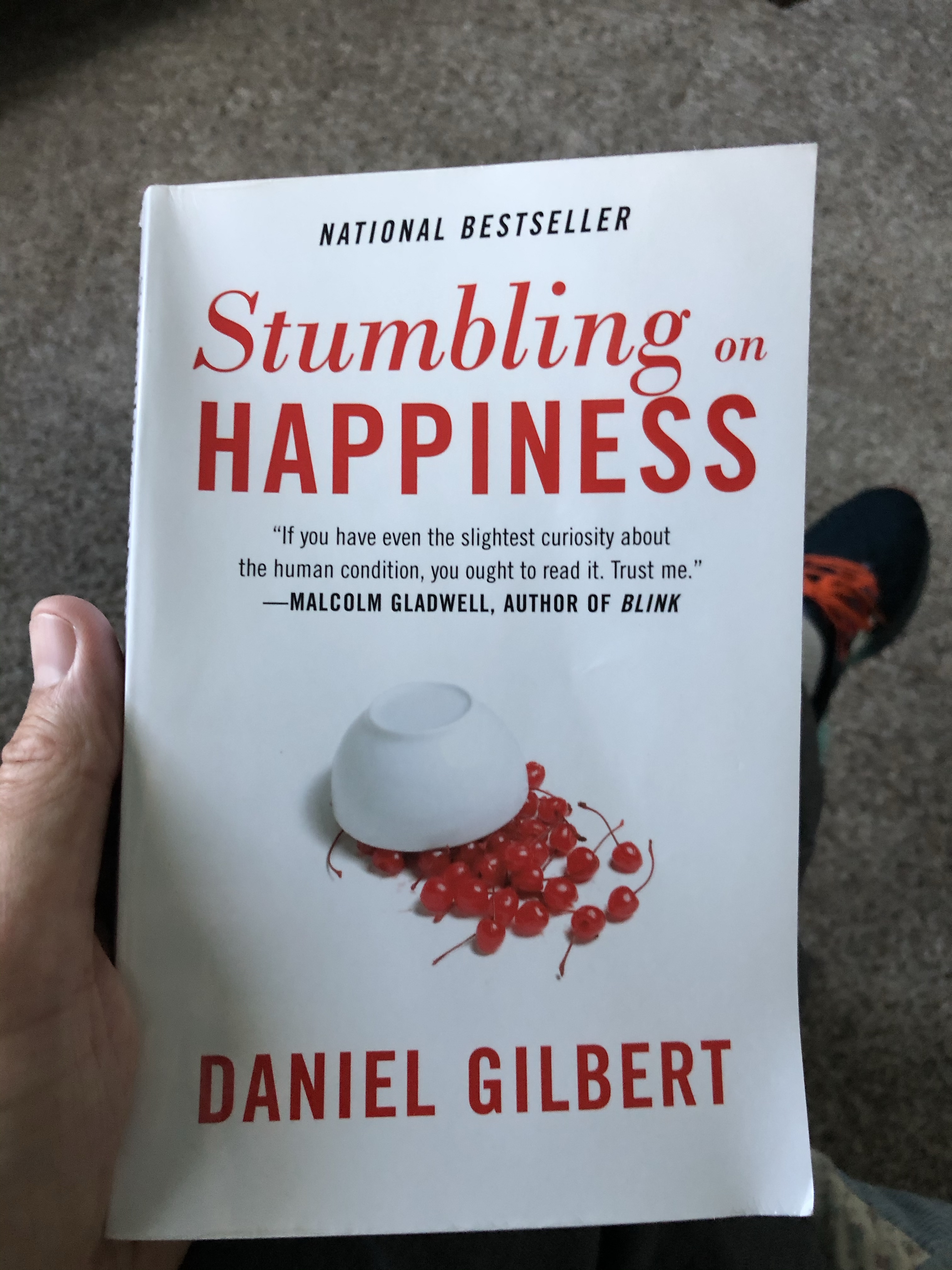
In the book, “Stumbling on Happiness” by Daniel Gilbert, he discusses WHY these little triggers (as he titles them) can cause more havoc than big, devastating events.

We have a psychological immune systems, like many systems in our bodies, work with thresholds. When something is large enough to go over that threshold a defense mechanism is triggered and set into motion. We can rationalize a breakup with someone we love. We can overcome fractures, dislocations, and the links easier than we can overcome a slice to the pinky toe. We can move on stronger when we don’t get the job we sorely wanted more easily than we can overcome ruining our favorite shirt with a bbq stain.

When the attack is under our threshold, we don’t deploy our defensive “troops” to overcome the insult.

So what does this mean?

It means we are amazing, first of all.

We were created with extreme resiliency to overcome huge challenges.

It also means we need to be more vigilant in working through the little things in order to circumvent their effects.

Be conscious of life’s little cuts, and actively work to overcome them. The big stuff, most likely, we are already prepared for.

Happy Wednesday!

-Dr Lindeman
Ways to be happy :-)

These are great words of advice.

However, I don’t feel we NEED to love simply all the time. Doing some extravagant things (big vacations, big experiences) can truly be a gateway to happiness as well.

As long as we are doing them to savor and not to show off 😎

Find one thing on this list and expand it in your life today.

Happy Monday!

-Dr Lindeman.

Pygmies and the horizon

This story was taken from the book below:

“About 50 years ago a Pygmy named Kenge took his first trip out of the dense, tropical forests of Africa and into the open plains in the company of an anthropologist. Buffalo appeared in the distance-small black specks against a bleached sky- and the Pygmy surveyed them curiously. Finally, he turned to the anthropologist and asked what kind of insects they were. “When I told Kenge that these insects were indeed large buffalo, he roared with laughter and told me not to tell such stupid lies.”

The Pygmy had no concept of a distant horizon, he lived his life in a dense tropical forest. His perception drove his reality.

Sometimes we need to borrow others’ vision in order to see what is possible. Sometimes we don’t have a concept of a distant horizon 🙂

Borrow a BIG vision for your future today!

Happy Thirsday

-Dr Lindeman

Practice Kindness… It makes YOU happy

Want to be happier?

Be NICE to others 🙂

IMG_4058


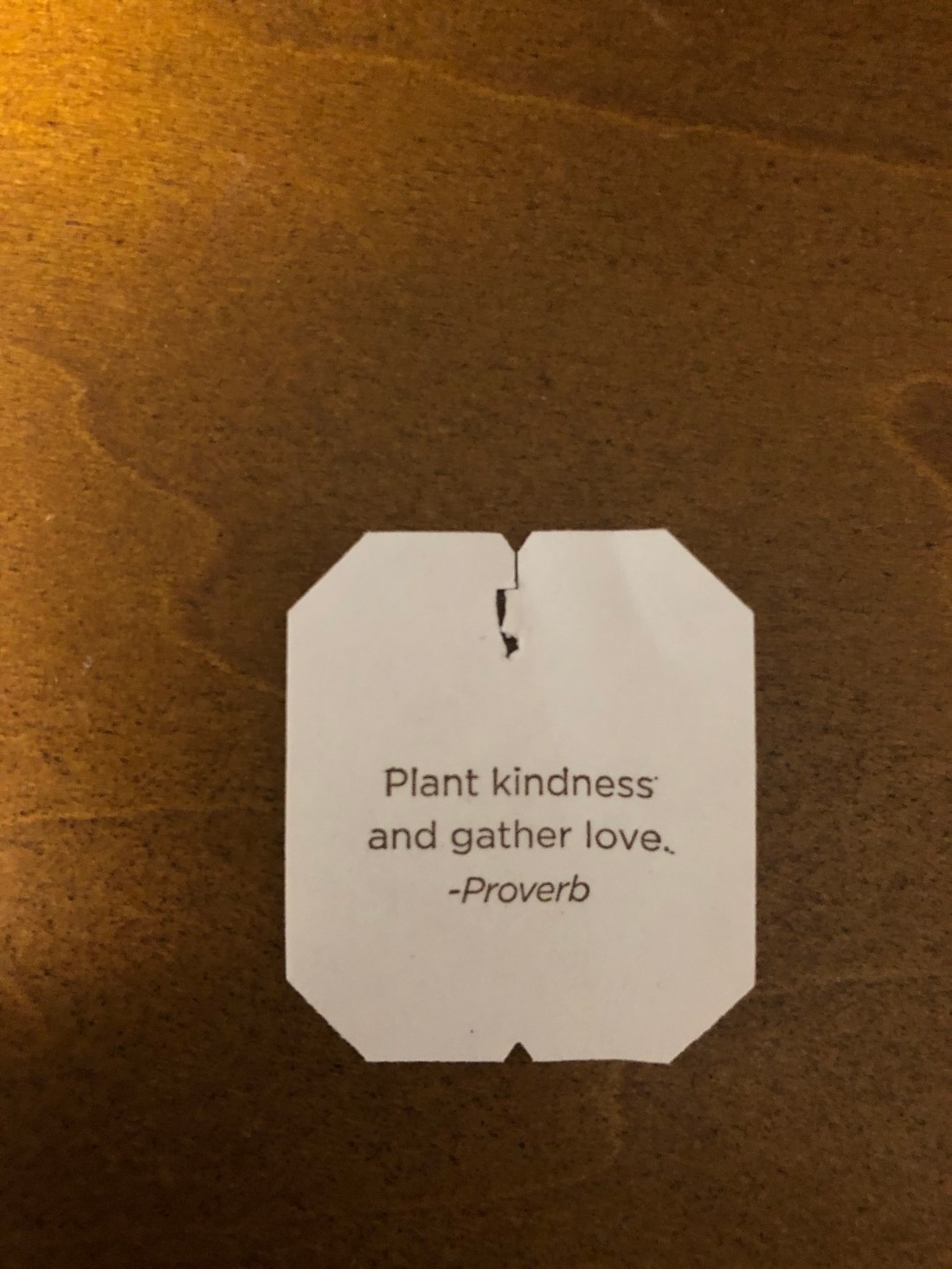
There is a PLETHORA of evidence that shows when we practice kindness toward others, we increase our own happiness. This study published in the Journal of Social Psychology showed that people who performed acts of kindness for 10 days, were significantly happier than those who did not.

The website: kindness.org did a meta-analysis (basically taking a whole bunch of studies on the same thing, figuring out their validity and combining the results) that showed in fact “being kind genuinely does boost your happiness.” (https://medium.com/kindlab/does-kindness-create-happiness-19126c5883ff)

Another study that I learned about this morning, measured happiness scores between people who were given $5 or $20 and they could spend on themselves or others. The people who spent on others were across the board happier. Even more interesting though was they also did this study in Canada and in Uganda. $20 means a lot more to people in Uganda than it does to people living in urban Canada. The same amount of money that can buy you a few lattes in Canada can purchase important medication for your whole family in Uganda. What the researchers found was that people in both areas felt happier (and almost by the same amount) when they spent the money on others, rather than themseleves/their own families.

I love this study for a few reasons. 1) Be kind, you will be happier and 2) It doesn’t take A BIG thing to increase your happiness.  Small acts of kindness will improve your own well-being just as  much as HUGE ones. The good news about that, small acts are so much easier to do over-and-over again, day after day.

So do some small things, plant some kindness and soak up that love you feel inside 🙂

Have a kind and happy Wednesday!

-Dr. Lindeman


Hedonic adaptation

hedonic-treadmill

Today, in my coursework video (The Science of Well-Being through Coursera in concert with Yale), the professor went over the term: hedonic adaptation.

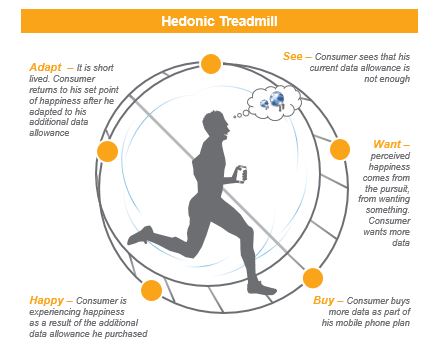
The theory of hedonic adaptation or the hedonic treadmill is that as humans, we search for things/experiences that we feel will make us happy, but once we have them, their effect on our happiness dwindles with time.

You can’t wait to buy that new car, and it makes you so happy to drive around in it…for the first few months, then it becomes just a car.

You cannot wait to move into your new home, but after a few years, it is just your home.

The above may be slight exaggerations, but you get the gist.

Our brains are “wired” to get used to stuff. So even AMAZING things, become less amazing with time.

So how do we combat this natural ability to lessen our happiness?

For one: GRATITUDE.

Think back to things you were so happy to be able to purchase/experience in the past, and re-kindle that gratitude today.

Another way: focus on experiences, not things.

We all need things and it is perfectly ok to buy a new vehicle every once in a while, or shiny shoes or etc.

But research shows our happiness scores are higher and last longer when we experience things (vacations, meals, time with friends, etc), even when we believe they will  not. Research also shows that, even though across the board we are happier, and the effects are longer lasting, with experiences, we tend to believe that we will be much happier with the thing that lasts longer rather than the fleeting experience.

So we need to trick our minds a bit and incorporate more experiences into our quest for happiness.

Vacations, bbqs, friendly games of corn-hole, sing and dance with your spouse/partner/friend/family at your house, sit outside with your family making smores around the fire-pit, go camping, etc.

These experiences are truly enjoyable, and the memories are fond and long lasting (in part because they END. The vehicle you buy will last for years, and you get accustomed to it’s presence). Experiences also allow us to feel we are benefitting others (oxytocin is a much longer lasting key to happiness feeling than dopamine. Oxytocin is released when we are connected with others, dopamine is more of a solitary hormone). Others benefit by joining us in the experience, and we can tell others about our experiences more than we can about our “things.” People also are much happier to hear about experiences rather than the new coat you bought 🙂

So get out there today (or if the pandemic limits that, start PLANNING your next experience), create a fuller, longer-lasting happiness by virtue of your experiences!

-Happy Tuesday!

Dr. Lindeman


Your view/your future

This is an excerpt from the book: “Stumbling on Happiness” by Daniel Gilbert.

Good book so far.

The point I want to make form the Shakespeare quote is that we need to create our own happiness.

We can “borrow” goals and visions from others, but ultimately, we need to steer our own ship.

Just because you see some successes make others happy, they may not make you feel the same.

Find what lights you up, and work toward doing more of that :-).

-Happy Monday!

Dr Lindeman

Multiple choices

In any given situation, we always have choices.

In situations of adversity or success, we will always have options, and depending on how we choose, the results can easily flip the situation on its head (adversity—>success, success—>adversity).

Situations never define us, it’s how we react to them that creates who we are, and sets the stage for our future.

We can achieve a victory and then stop practicing. We can obtain the amazing job, and therefore become complacent in learning. We can lose 20 lbs and then decide we can stop exercising.

All of these successful situations are wonderful, but the decisions after the achievement can create a more negative future.

Likewise, we can lose the race, and decide to train harder. We can fail an exam and decide to study more. We can find ourselves in quarantine, and decide to create paths to a better future with our time.

Even when things ‘royally suck’, it’s truly how we react to them that matters most.

We are NEVER victims of our circumstance. We are only truly victims of how we react to them.

You always have options…Choose wisely my friends!

Happy Wednesday!

-Dr Lindeman

It’s about you!

Do you think the #1 pole vaulter in the world even knows who the #1 juggler in the world is?

Does the highest paid cricket player in the world have any idea how much the highest paid toothpaste ad man makes?

Does the world’s most renowned microbiologist have an inkling of who the world’s most renowned sous-chef is?

The answer to all of these questions (I’m 99.9% sure, can’t be 100% because the cricket player and toothpaste guy could be neighbors, you never know) is NO WAY!

The point is, if we scratch and claw to become the best in order to compare ourselves to others, the amount of people we can even compare ourselves to is minuscule when we think of the world as a whole.

We should all strive to be the best we can be at whatever we choose to do (and that doesn’t have to mean a job, or a sport, we can be the best dad/husband/wife/son/friend that WE can be).

But we should NEVER try to be the best in comparison to anyone else.

Because the fact of the matter is, we can never be the best anything besides our best selves!

Happy Tuesday!

At being you!

-Dr Lindeman

Just 1%

What if we just tried to do 1% better today?

Just attempt to be 1% better at our jobs, our hobbies, our parenting, our friendships, our exercise regimen, our role as humans?

Seems pretty easy and simple to me.

Too often we put big demands on ourselves, to take drastic steps toward improvement. But consistency rules all.

If we can work in improving in smaller chunks everyday, we will be tremendously better than if we attempt to take large jumps.

We can stick with 1% for sure!

So get out there and give me 1% more 😀

Happy Monday!

-Dr Lindeman

Your smile changes the world

Especially fitting during these times.

Your smile can change the world! It can light up someone’s day, it can push away the dark.

Just make sure you are using that gift and not letting it go dormant.

Complacency kills.

We need to arm ourselves with more positivity and more light in order to push back the dark.

So 😀😁😆😂🤣🙂😍 all you can today 🙂